





Understand Agile Jamming: How to Master Precision


2025-12-22 15:40
Understand Agile Jamming: How to Master Precision
Have you also often heard the term "AWP SDR 2.0 Agile Jamming" but felt a bit confused about it? Don't worry—today we'll help you fully understand it.
What Exactly is Agile Jamming?
In a nutshell:
- Traditional Jamming = Full Firepower Coverage
- Agile Jamming = Precise Surgical Strike
Its technical core lies in:
Instead of full-band energy suppression, it real-time detects and analyzes the communication signal characteristics of the target drone (e.g., frequency, waveform, modulation, protocol), dynamically generates a dedicated jamming signal that highly matches these features, and achieves efficient, precise jamming.
In short, Agile Jamming pursues intelligent countermeasures with the effect of "moving a thousand pounds with four ounces".

Why Do We Need It?
In the "spear vs. shield" contest between drones and anti-drone systems, traditional jamming methods are gradually failing…
First, the "spear" has become stronger: Drones have learned to "hide" and "evade"
- Uncertain Frequency Points
DIY FPV racing drones use unconventional frequency bands (e.g., 370–420MHz, 750–780MHz), which traditional devices simply cannot cover.
- Proprietary Protocols + Anti-Jamming Technology
Brands like DJI (OcuSync) and Autel (SkyLink) use self-developed proprietary transmission protocols, plus technologies like frequency hopping and spread spectrum—making it hard for traditional jamming to lock on and suppress them.
Second, the "shield" is outdated: The "clumsy methods" of traditional jamming come at a high cost.
There are 2 main traditional methods, but both have obvious flaws:
- Human Wave Tactics – Stacking Modules
Practice: E.g., use 9 modules (each covering 100MHz) to achieve full coverage of 300~1200MHz.
Cost: Bulky, expensive, high power consumption, poor portability.
- Casting a Wide Net – Sacrificing Power
Practice: Use fewer modules, each covering a wider band (e.g., 200MHz).
Cost: Lower power spectral density of jamming signals, shorter jamming distance, worse actual performance.
So, How Can Agile Jamming Break Through?
- Addressing Uncertain Frequency Points?
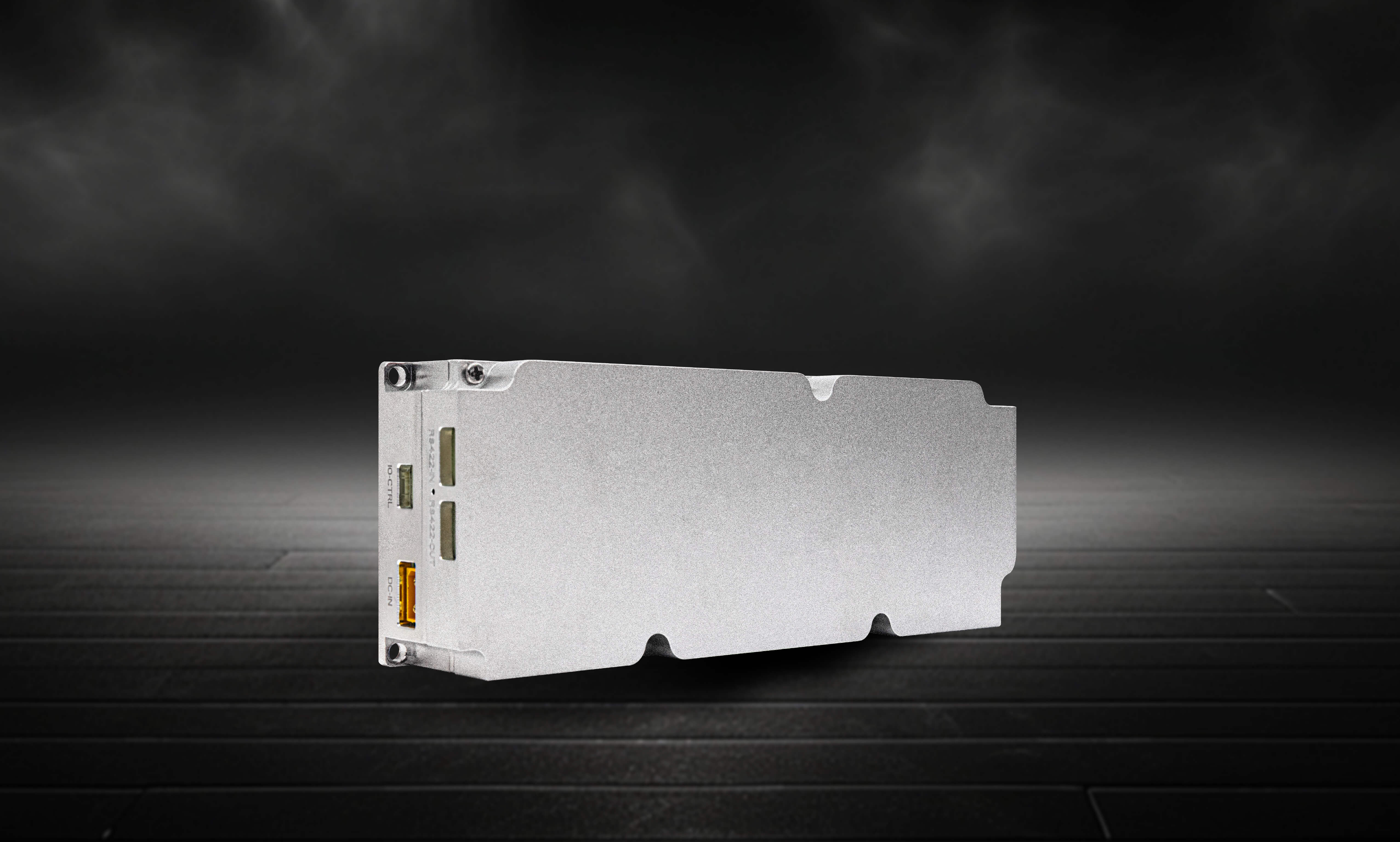
Agile jamming systems integrate detection modules and SDR 2.0 digital source modules, adopt wideband power amplifier technology, and directly cover 300~1200MHz.No need to stack modules—it truly achieves "frequency-independent" countermeasures, adapting to unconventional bands like FPV.
- Addressing Frequency Hopping and Spread Spectrum?
"You can hop, I can follow." It dynamically generates highly matched jamming codes based on real-time detected drone signal features (remote control frequency points & signal types). With concentrated energy and high spectral density, it suppresses targets effectively while consuming less power overall.
- Addressing Drone Swarms?
Wideband detection modules can detect multiple drone remote control signals; the controller then matches corresponding frequencies and jamming codes for different jamming units. It adapts to multi-drone, multi-frequency scenarios and enables dynamic resource allocation.
It adapts to multi-drone, multi-frequency scenarios and enables dynamic resource allocation.

In Summary:
Traditional Jamming v.s. Agile Jamming
Category | Traditional Jamming | SDR Agile Jamming |
Jamming Method | Large-scale frequency-sweeping noise coverage | Precisely target specific signal parameters |
Jamming Effect | Poor (against anti-jamming drones) | Good (against anti-jamming drones) |
Power Consumption | High power, low efficiency | Low power, high efficiency |
Concealment | Easy to be detected | Hard to be identified as a jamming source |
Cost-Effectiveness | Low | High |
Anti-Countermeasure Capability | Weak (fixed mode) | Strong (dynamic adjustment) |
Precision Strike | Affects friendly communications & civilian facilities (airports, nuclear plants) | Achieves precision strikes, avoids "collateral damage" |
Operating Time | Short (high power, high heat) | Long (low power, low heat) |
In this ever-escalating "spear vs. shield" competition, the winner is never the one with greater power—but the one with smarter strategies. Agile Jamming is exactly the key to breaking through in this contest.
Get A Quote
We will contact you within one working day. Please pay attention to your email.
Contact Us
Add.: Room C10, 3rd Floor, Chuangtuo Industrial Park, Zhujiang Road, Jianxi District, Luoyang, Henan, China.