



FPV Drones: Reshaping Modern Warfare and Emerging Security Challenges


2026-02-05 16:40
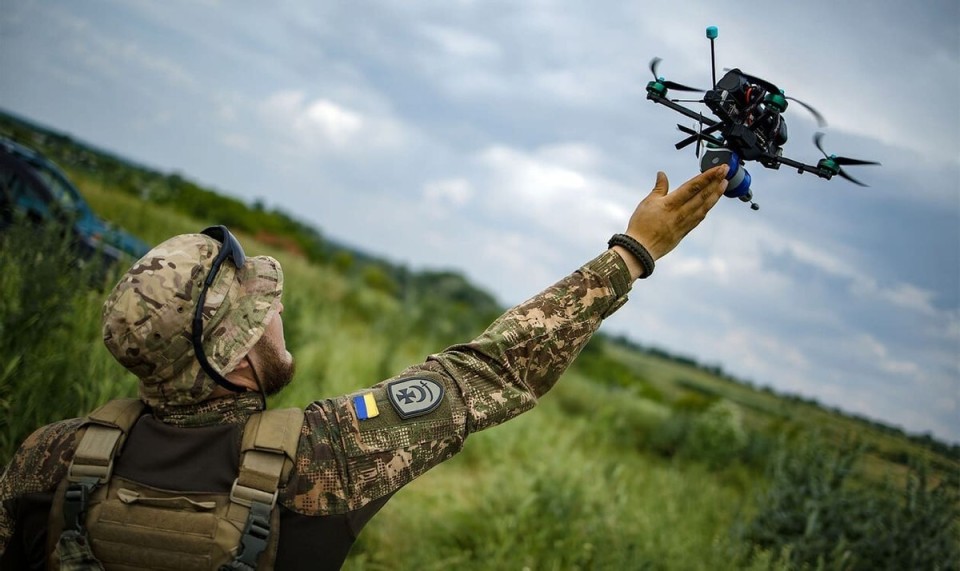
As a key branch of unmanned aerial systems (UAS), first-person view (FPV) drones are predominantly designed with a small quadrotor configuration, and some fuselages are manufactured using lightweight technologies such as 3D printing. Endowed with high maneuverability and precision strike capabilities through real-time operator control, these drones have demonstrated powerful tactical raid effects in actual combat and are profoundly reshaping the operational landscape of modern localized conflicts. FPV drones have been deployed in high-intensity, systematic and large-scale combat applications on the battlefield in Ukraine, showcasing outstanding multi-mission capabilities: in addition to basic reconnaissance, they can be equipped with thermal imaging devices to conduct precision strikes under real-time control. Today, they have evolved into a new tactical platform integrating reconnaissance and strike functions.
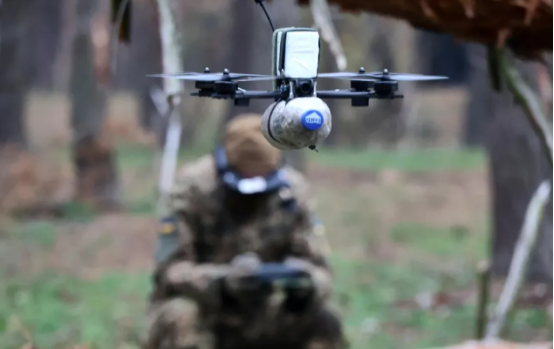
Their low cost and ease of operation enable ordinary ground infantry to perform aerial reconnaissance and strike missions after short-term training, truly extending aerial combat capabilities to the smallest operational units on the tactical frontlines.
I. Deployment and Development Dynamics of FPV Drones by the U.S. Military
In response to the combat effectiveness of FPV drones demonstrated in actual combat, the U.S. Department of Defense has identified them as a key development area and is advancing their militarization in a systematic manner through capacity expansion, personnel training, equipment procurement and other measures.
(1) Top-Down Policy Drive and Training Integration
On July 10, 2025, U.S. Secretary of Defense Pete Hegseth issued a directive explicitly requiring the full integration of UAS combat capabilities into all combat training programs. This top-level policy directly prompted the U.S. military to launch the construction of a large-scale FPV drone training system in the same year. The aim is to enable ground forces to master relevant operations and tactical applications through combat-oriented training, laying a solid foundation for subsequent large-scale fielding and combat capability generation.
(2) Large-Scale Procurement and Capacity Planning
In November 2025, U.S. Secretary of the Army Dan Driscoll publicly announced that the Army plans to procure and produce a total of 1 million drones within 2 to 3 years, with FPV models accounting for a considerable proportion. To achieve this goal, the U.S. Department of Defense issued clear procurement requirements to defense contractors in the same period, planning to solicit more than 300,000 small attack drones capable of carrying explosive payloads. This move is intended to substantially expand the U.S. military’s operational equipment stockpile in this field and systematically address the growing demand for UAS operations in modern warfare.
II. Profound Impacts of FPV Drones on Modern Operational Patterns
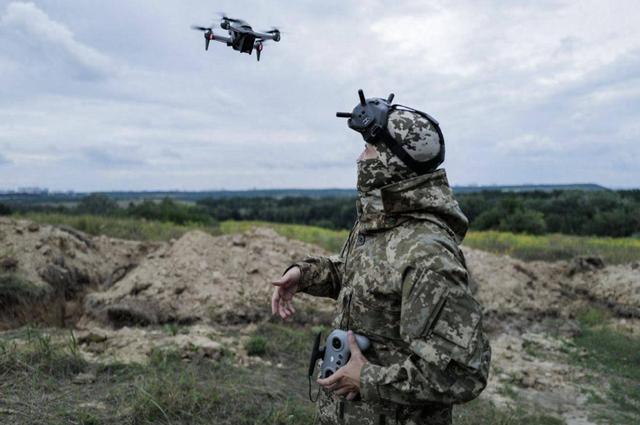
The widespread application of FPV drones, especially their full allocation to tactical terminal units such as squad and platoon-level formations, is profoundly reshaping modern operational models and will exert a systemic impact on the future form of warfare. Such impacts are mainly reflected in the following eight core dimensions:
(1) Popularization of Miniaturized Air Power
FPV drones have for the first time endowed frontline ground forces with direct aerial reconnaissance and precision strike capabilities, allowing individual soldiers or squads to gain operational advantages that previously relied on professional air power. With autonomous navigation and real-time image transmission, soldiers can independently complete battlefield reconnaissance, target locking and precision strike missions without air support, significantly enhancing the independent combat and rapid response capabilities of ground units.
(2) All-Round Upgrading of Reconnaissance Capabilities
FPV drones have greatly enhanced battlefield reconnaissance and strike capabilities. Their dense deployment in forward areas has significantly compressed the fog of war, making traditional covert ground maneuver and tactical raids difficult to implement. This change has forced warring parties to comprehensively upgrade military camouflage, electromagnetic silence and deception tactics at both strategic and tactical levels. For example, at the U.S. Army’s inaugural Best Drone Operator Competition held in Germany in December 2025, operators from the Spanish Legion Brigade won the championship with their advanced camouflage technologies and covert control capabilities. This fully demonstrates that in a battlefield environment dominated by FPV drones, superior anti-reconnaissance capabilities and survival skills have become key combat strengths.
(3) Platform-Oriented Transformation of Attack Modes
By carrying explosive payloads, FPV drones have transformed from reconnaissance tools into highly efficient unidirectional strike platforms, fundamentally restructuring the delivery mode of precision ordnance. As low-cost and flexible suicide drones, they are rapidly becoming the mainstream precision strike method on modern battlefields. At the same time, the proliferation of this technology has transcended the military domain and extended to non-traditional security fields. For instance, a September 2025 report by the Atlantic Council pointed out that organized criminal groups, including drug cartels, have begun to use modified attack drones; in October 2025, the Prosecutor's Office of Tijuana, Mexico, was attacked by three explosive-carrying drones, highlighting the cross-domain security challenges posed by such technologies.
(4) Exponential Enhancement of Individual Combat Capabilities
Through swarm technology, FPV drones can achieve coordinated multi-drone deployment, enabling a single combatant to control a group of aerial systems to perform missions simultaneously. This technology is not only applicable to FPV drones but also widely used in various unmanned equipment. While reducing the demand for battlefield personnel, it is also driving the transformation of warfare toward man-machine collaboration, placing higher demands on combatants' man-machine coordination capabilities.
With cluster control and organized application, a single operator can command multiple FPV drones to execute missions collaboratively at the same time. This technology is not only suitable for FPV platforms but also extensively applied to various types of unmanned equipment. It significantly reduces battlefield manpower requirements while promoting the shift of operational patterns toward large-scale, distributed man-machine collaboration, and places higher-level demands on operators' situational awareness, mission planning and multi-unit coordination capabilities.
(5) Deepening of Autonomous System Collaborative Operations
FPV drones are being integrated as key nodes into artificial intelligence-driven multi-domain autonomous combat systems. Through aircraft-to-aircraft collaboration networks, these drones can achieve autonomous route planning and obstacle avoidance, and share real-time target images and tactical intelligence within the cluster, thereby performing complex missions with a unique collaborative model. Although human operators still maintain a necessary role in the supervision and decision-making loop, the combat process has shown the characteristic of minimized direct human intervention, marking the emergence of a highly autonomous combat mode centered on intelligent unmanned systems as a reality.
(6) Redefinition of Battlefield Boundaries
With their long-range reconnaissance and precision strike capabilities, FPV drones are breaking through the geographical boundaries of traditional battlefields. This trend not only reshapes the form of military confrontation but also brings unprecedented security pressure to law enforcement agencies. To address such non-traditional threats, the U.S. Department of Defense has taken the lead in establishing the Joint Interagency Task Force 401, aiming to coordinate the resources and operations of the military and law enforcement agencies to jointly guard against the multi-dimensional threats that FPV drones may pose to military installations, critical infrastructure and civilian safety.
(7) Demand for Upgraded Anti-Adversity of UAS Technologies
Despite their outstanding tactical flexibility, the lightweight design of FPV drones also brings obvious limitations in environmental adaptability: their combat effectiveness is restricted in severe weather conditions, they have insufficient ability to evade simple physical obstacles, and they are vulnerable to low-tech countermeasures such as hostile drones and net interception systems. To adapt to high-intensity confrontational environments, current defense research and development is focusing on enhancing the anti-jamming capabilities, weather resistance and battlefield survivability of FPV platforms under kinetic threats, aiming to drive the evolution of such equipment toward higher resilience and reliability.
(8) Construction of a Comprehensive Anti-Drone Defense System
With the widespread application of FPV drones in battlefield and non-traditional security fields, the research and development of anti-drone systems tailored to their characteristics has entered a stage of targeted enhancement. Current defense methods show a development trend of diversification and coordination, mainly including: interception drones specially designed to hunt FPV drones, net capture and obstacle deployment systems for physical interception, and directed energy weapons such as laser systems. These technologies are gradually being integrated to build a multi-layered anti-drone defense system covering hard and soft kill capabilities and combining short and long-range coverage.
III. Conclusion
With the continuous evolution of technology, military FPV drones will achieve significant improvements in range, payload and autonomy, further consolidating their tactical and strategic value in modern warfare. Although such platforms still cannot be separated from human decision-making and supervision, they have expanded traditional combat boundaries in multiple dimensions such as ordnance delivery, reconnaissance and surveillance, and defense systems, accelerating the evolution of warfare toward a more efficient and complex man-machine collaborative direction. At the same time, the continuous proliferation of FPV drones into non-military domains is bringing more diverse security threats, which urgently requires the international community and relevant institutions to form coordinated and systemic response mechanisms.
Get A Quote
We will contact you within one working day. Please pay attention to your email.
Contact Us
Add.: Room C10, 3rd Floor, Chuangtuo Industrial Park, Zhujiang Road, Jianxi District, Luoyang, Henan, China.